چهارشنبه ۱ سپتامبر ۲۰۱۰

آیت الله شریعتمداری به روایت میشل فوکو - بخش یکم

0 دیدگاه

File:Foucault5.jpg


An excerpt from

Foucault and the Iranian Revolution

Gender and the Seductions of Islamism

Janet Afary and Kevin B. Anderson


What Are the Iranians Dreaming About?
Michel Foucault
"" I wanted to respond that they are even less ready to let go of you than Vietnam because of oil, because of the Middle East. Today they seem ready, after Camp David, to concede Lebanon to Syrian domination and therefore to Soviet influence, but would the United States be ready to deprive itself of a position that, according to circumstance, would allow them to intervene from the East or to monitor the peace?
Will the Americans push the shah toward a new trial of strength, a second "Black Friday"? The recommencement of classes at the university, the recent strikes, the disturbances that are beginning once again, and next month's religious festivals, could create such an opportunity. The man with the iron hand is Moghadam, the current leader of the SAVAK.
This is the backup plan, which for the moment is neither the most desirable nor the most likely. It would be uncertain: While some generals could be counted on, it is not clear if the army could be. From a certain point of view, it would be useless, for there is no "communist threat": not from outside, since it has been agreed for the past twenty-five years that the USSR would not lay a hand on Iran; not from inside, because hatred for the Americans is equaled only by fear of the Soviets.
Whether advisers to the shah, American experts, regime technocrats, or groups from the political opposition (be they the National Front or more "socialist-oriented" men), during these last weeks everyone has agreed with more or less good grace to attempt an "accelerated internal liberalization," or to let it occur. At present, the Spanish model is the favorite of the political leadership. Is it adaptable to Iran? There are many technical problems. There are questions concerning the date: Now, or later, after another violent incident? There are questions concerning individual persons: With or without the shah? Maybe with the son, the wife? Is not former prime minister Amini, the old diplomat pegged to lead the operation, already worn out?
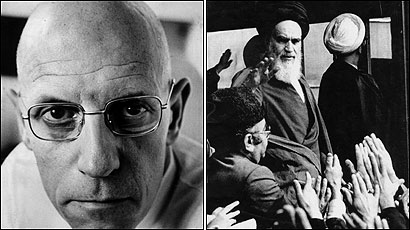
The King and the Saint
There are substantial differences between Iran and Spain, however. The failure of economic development in Iran prevented the laying of a basis for a liberal, modern, westernized regime. Instead, there arose an immense movement from below, which exploded this year, shaking up the political parties that were being slowly reconstituted. This movement has just thrown half a million men into the streets of Tehran, up against machine guns and tanks.
Not only did they shout, "Death to the Shah," but also "Islam, Islam, Khomeini, We Will Follow You," and even "Khomeini for King."
The situation in Iran can be understood as a great joust under traditional emblems, those of the king and the saint, the armed ruler and the destitute exile, the despot faced with the man who stands up bare-handed and is acclaimed by a people. This image has its own power, but it also speaks to a reality to which millions of dead have just subscribed.
The notion of a rapid liberalization without a rupture in the power structure presupposes that the movement from below is being integrated into the system, or that it is being neutralized. Here, one must first discern where and how far the movement intends to go. However, yesterday in Paris, where he had sought refuge, and in spite of many pressures, Ayatollah Khomeini "ruined it all."
He sent out an appeal to the students, but he was also addressing the Muslim community and the army, asking that they oppose in the name of the Quran and in the name of nationalism these compromises concerning elections, a constitution, and so forth.
Is a long-foreseen split taking place within the opposition to the shah? The "politicians" of the opposition try to be reassuring: "It is good," they say. "Khomeini, by raising the stakes, reinforces us in the face of the shah and the Americans. Anyway, his name is only a rallying cry, for he has no program. Do not forget that, since 1963, political parties have been muzzled. At the moment, we are rallying to Khomeini, but once the dictatorship is abolished, all this mist will dissipate. Authentic politics will take command, and we will soon forget the old preacher." But all the agitation this weekend around the hardly clandestine residence of the ayatollah in the suburbs of Paris, as well as the coming and going of "important" Iranians, all of this contradicted this somewhat hasty optimism. It all proved that people believed in the power of the mysterious current that flowed between an old man who had been exiled for fifteen years and his people, who invoke his name.
The nature of this current has intrigued me since I learned about it a few months ago, and I was a little weary, I must confess, of hearing so many clever experts repeating: "We know what they don't want, but they still do not know what they want."
"What do you want?" It is with this single question in mind that I walked the streets of Tehran and Qom in the days immediately following the disturbances. I was careful not to ask professional politicians this question. I chose instead to hold sometimes-lengthy conversations with religious leaders, students, intellectuals interested in the problems of Islam, and also with former guerilla fighters who had abandoned the armed struggle in 1976 and had decided to work in a totally different fashion, inside the traditional society.
"What do you want?" During my entire stay in Iran, I did not hear even once the word "revolution," but four out of five times, someone would answer, "An Islamic government." This was not a surprise. Ayatollah Khomeini had already given this as his pithy response to journalists and the response remained at that point.
What precisely does this mean in a country like Iran, which has a large Muslim majority but is neither Arab nor Sunni and which is therefore less susceptible than some to Pan-Islamism or Pan-Arabism?
Indeed, Shiite Islam exhibits a number of characteristics that are likely to give the desire for an "Islamic government" a particular coloration. Concerning its organization, there is an absence of hierarchy in the clergy, a certain independence of the religious leaders from one another, but a dependence (even a financial one) on those who listen to them, and an importance given to purely spiritual authority. The role, both echoing and guiding, that the clergy must play in order to sustain its influence-this is what the organization is all about. As for Shi'ite doctrine, there is the principle that truth was not completed and sealed by the last prophet. After Muhammad, another cycle of revelation begins, the unfinished cycle of the imams, who, through their words, their example, as well as their martyrdom, carry a light, always the same and always changing. It is this light that is capable of illuminating the law from the inside. The latter is made not only to be conserved, but also to release over time the spiritual meaning that it holds. Although invisible before his promised return, the Twelfth Imam is neither radically nor fatally absent. It is the people themselves who make him come back, insofar as the truth to which they awaken further enlightens them.
It is often said that for Shi'ism, all power is bad if it is not the power of the Imam. As we can see, things are much more complex. This is what Ayatollah Shariatmadari told me in the first few minutes of our meeting: "We are waiting for the return of the Imam, which does not mean that we are giving up on the possibility of a good government. This is also what you Christians are endeavoring to achieve, although you are waiting for Judgment Day." As if to lend a greater authenticity to his words, the ayatollah was surrounded by several members of the Committee on Human Rights in Iran when he received me.
One thing must be clear. By "Islamic government," nobody in Iran means a political regime in which the clerics would have a role of supervision or control. To me, the phrase "Islamic government" seemed to point to two orders of things.
"A utopia," some told me without any pejorative implication. "An ideal," most of them said to me. At any rate, it is something very old and also very far into the future, a notion of coming back to what Islam was at the time of the Prophet, but also of advancing toward a luminous and distant point where it would be possible to renew fidelity rather than maintain obedience. In pursuit of this ideal, the distrust of legalism seemed to me to be essential, along with a faith in the creativity of Islam.
A religious authority explained to me that it would require long work by civil and religious experts, scholars, and believers in order to shed light on all the problems to which the Quran never claimed to give a precise response. But one can find some general directions here: Islam values work; no one can be deprived of the fruits of his labor; what must belong to all (water, the subsoil) shall not be appropriated by anyone. With respect to liberties, they will be respected to the extent that their exercise will not harm others; minorities will be protected and free to live as they please on the condition that they do not injure the majority; between men and women there will not be inequality with respect to rights, but difference, since there is a natural difference. With respect to politics, decisions should be made by the majority, the leaders should be responsible to the people, and each person, as it is laid out in the Quran, should be able to stand up and hold accountable he who governs.
It is often said that the definitions of an Islamic government are imprecise. On the contrary, they seemed to me to have a familiar but, I must say, not too reassuring clarity. "These are basic formulas for democracy, whether bourgeois or revolutionary," I said. "Since the eighteenth century now, we have not ceased to repeat them, and you know where they have led." But I immediately received the following reply: "The Quran had enunciated them way before your philosophers, and if the Christian and industrialized West lost their meaning, Islam will know how to preserve their value and their efficacy."
When Iranians speak of Islamic government; when, under the threat of bullets, they transform it into a slogan of the streets; when they reject in its name, perhaps at the risk of a bloodbath, deals arranged by parties and politicians, they have other things on their minds than these formulas from everywhere and nowhere. They also have other things in their hearts. I believe that they are thinking about a reality that is very near to them, since they themselves are its active agents.
It is first and foremost about a movement that aims to give a permanent role in political life to the traditional structures of Islamic society. An Islamic government is what will allow the continuing activity of the thousands of political centers that have been spawned in mosques and religious communities in order to resist the shah's regime. I was given an example. Ten years ago, an earthquake hit Ferdows. The entire city had to be reconstructed, but since the plan that had been selected was not to the satisfaction of most of the peasants and the small artisans, they seceded. Under the guidance of a religious leader, they went on to found their city a little further away. They had collected funds in the entire region. They had collectively chosen places to settle, arranged a water supply, and organized cooperatives. They had called their city Islamiyeh. The earthquake had been an opportunity to use religious structures not only as centers of resistance, but also as sources for political creation. This is what one dreams about [songe] when one speaks of Islamic government.
The Invisible Present
But one dreams [songe] also of another movement, which is the inverse and the converse of the first. This is one that would allow the introduction of a spiritual dimension into political life, in order that it would not be, as always, the obstacle to spirituality, but rather its receptacle, its opportunity, and its ferment. This is where we encounter a shadow that haunts all political and religious life in Iran today: that of Ali Shariati, whose death two years ago gave him the position, so privileged in Shi'ism, of the invisible Present, of the ever-present Absent.
During his studies in Europe, Shariati, who came from a religious milieu, had been in contact with leaders of the Algerian Revolution, with various left-wing Christian movements, with an entire current of non-Marxist socialism. (He had attended Gurvitch's classes.) He knew the work of Fanon and Massignon. He came back to Mashhad, where he taught that the true meaning of Shi'ism should not be sought in a religion that had been institutionalized since the seventeenth century, but in the sermons of social justice and equality that had already been preached by the first imam. His "luck" was that persecution forced him to go to Tehran and to have to teach outside of the university, in a room prepared for him under the protection of a mosque. There, he addressed a public that was his, and that could soon be counted in the thousands: students, mullahs, intellectuals, modest people from the neighborhood of the bazaar, and people passing through from the provinces. Shariati died like a martyr, hunted and with his books banned. He gave himself up when his father was arrested instead of him. After a year in prison, shortly after having gone into exile, he died in a manner that very few accept as having stemmed from natural causes. The other day, at the big protest in Tehran, Shariati's name was the only one that was called out, besides that of Khomeini.
The Inventors of the State
I do not feel comfortable speaking of Islamic government as an "idea" or even as an "ideal." Rather, it impressed me as a form of "political will." It impressed me in its effort to politicize structures that are inseparably social and religious in response to current problems. It also impressed me in its attempt to open a spiritual dimension in politics.
In the short term, this political will raises two questions:
1. Is it sufficiently intense now, and is its determination clear enough to prevent an "Amini solution," which has in its favor (or against it, if one prefers) the fact that it is acceptable to the shah, that it is recommended by the foreign powers, that it aims at a Western-style parliamentary regime, and that it would undoubtedly privilege the Islamic religion?
2. Is this political will rooted deeply enough to become a permanent factor in the political life of Iran, or will it dissipate like a cloud when the sky of political reality will have finally cleared, and when we will be able to talk about programs, parties, a constitution, plans, and so forth?
Politicians might say that the answers to these two questions determine much of their tactics today.
With respect to this "political will," however, there are also two questions that concern me even more deeply.
One bears on Iran and its peculiar destiny. At the dawn of history, Persia invented the state and conferred its models on Islam. Its administrators staffed the caliphate. But from this same Islam, it derived a religion that gave to its people infinite resources to resist state power. In this will for an "Islamic government," should one see a reconciliation, a contradiction, or the threshold of something new?
The other question concerns this little corner of the earth whose land, both above and below the surface, has strategic importance at a global level. For the people who inhabit this land, what is the point of searching, even at the cost of their own lives, for this thing whose possibility we have forgotten since the Renaissance and the great crisis of Christianity, a political spirituality. I can already hear the French laughing, but I know that they are wrong.
First published in Le Nouvel Observateur, October 16-22, 1978.


Copyright notice: Excerpt from pages 203-9 of Foucault and the Iranian Revolution: Gender and the Seductions of Islamism by Janet Afary and Kevin B. Anderson, published by the University of Chicago Press. ©2005 by the University of Chicago. All rights reserved. This text may be used and shared in accordance with the fair-use provisions of U.S. copyright law, and it may be archived and redistributed in electronic form, provided that this entire notice, including copyright information, is carried and provided that the University of Chicago Press is notified and no fee is charged for access. Archiving, redistribution, or republication of this text on other terms, in any medium, requires the consent of the University of Chicago Press.

Janet Afary and Kevin B. Anderson
Foucault and the Iranian Revolution: Gender and the Seductions of Islamism
©2005, 312 pages
Cloth $60.00 ISBN: 0-226-00785-5
Paper $24.00 ISBN: 0-226-00786-3
For information on purchasing the book—from bookstores or here online—please go to the webpage for Foucault and the Iranian Revolution.

آیا روزه خواری جرم است؟

0 دیدگاه


منبع: دادنامه » عنوان اصلی: بررسی حقوقی جرم روزه خواری » پیوند پایدار: http://dadname.blogfa.com/post-118.aspx


۱.در قانون مجازات اسلامی عنوان مجرمانه ی "روزه خواری"وجود ندارد.عنصر قانونی این جرم ماده ی 638 ق.م.ا. است که بیان می کند: هرکس علنا در انظار عمومی و معابر تظاهر به عمل حرامی نماید علاوه بر کیفر عمل به حبس از ده روز تا دو ماه یا تا 74ضربه شلاق محکوم می گردد.و در صورتی که مرتکب عملی شود که نفس آن عمل دارای کیفر نمی باشد ولی عفت عمومی را جریحه دار می کند فقط به حبس از ده روز تا دو ماه یا تا 74 ضربه شلاق محکوم خواهد شد.البته این ماده تبصره ای هم راجع به مساله ی حجاب دارد.در بررسی ماده ی مذکور به موارد ذیل بر می خوریم:


1.1 ماده در حقیقت دو حکم را مورد بررسی قرار می دهد.اول حکم تظاهر به عمل حرام و دوم ارتکاب اعمالی که عفت عمومی را جریحه دار می کند.متاسفانه قانون گزار بسیار مبهم حکم این ماده را بیان کرده است.در قسمت اول معین نکرده که آیا عمل حرام باید در قانون هم مجازاتی داشته باشد یا نفس عمل حرام مد نظر است؟ دکتر عباس زراعت در تبیین این ابهام می گوید::«با در نظر گرفتن قیود "علاوه بر کیفر عمل" "نفس آن عمل دارای کیفر نمی باشد" و حرف عطف "و" قبل از "در صورتی که"،هدف قانون گذار در قسمت اول،عمل حرامی است که جرم نباشد ولی عفت عمومی را جریحه دار کند.ولی می توان گفت منظور از "عملی که دارای کیفر نمی باشد"صرفا عمل حرام شرعی نیست.(عباس زراعت،قانون مجازات اسلامی در نظم حقوقی کنونی،ققنوس،ص676) به عبارت دیگر ایشان معتقدند قسمت اول ماده اعمال حرام ذکر شده در قانون است و قسمت دوم اعمال خلاف عفت عمومی به طور مطلق.با این وجود ایشان روزه خواری را از مصادیق صدر ماده می دانند که در اینصورت نظریه ی خود را نقض کرده اند.به هر حال به نظر می رسد آوردن روزه خواری به مصادیق حکم صدر ماده صحیح تر است.


1.2با توجه به مطلب فوق،عنصر مادی این جرم تشکیل می شود از:


الف)انجام عمل حرام


ب)انجام علنی و در انظار عمومی و معابر


ج)تظاهر به انجام عمل حرام


الف)عمل حرام


آیا روزه خواری عملی حرام است؟همگی می دانیم که مسلمانان مکلف می بایست در ماه رمضان روزه بگیرند اما باز می دانیم که افراد به دلایل مختلفی-مسافرت،بیماری و...- از این حکم مستثنی می شوند و در اینصورت آنان عمل حرامی انجام نداده اند.پس چرا روزه خواری عملی حرام است؟دلیل حرمت این عمل یک قاعده ی فقهی است.قاعده ی فقهی حرمت اهانت به شعائر مذهبی که از آیات قرآن مثل آیه ی 3 سوره ی مائده گرفته می شود.بنا براین دلیل حرمت روزه خواری و تظاهر به آن حرمت شکنی احکام الهی است.(قواعد فقه،ابوالحسن محمدی،میزان،ص20)


در این باره نکته ی دیگری هم وجود دارد که آیا این ماده شامل افراد غیر مسلمان هم می شود یا خیر؟ دکتر زراعت معتقد است که تفاوتی در این باره وجود ندارد.(زراعت،ص675).اما دیدگاه دیگری هم به نظر می رسد.عمل حرام در ادیان مختلف تعاریف گوناگونی دارد و میبایست در این ماده اعمال حرام را از دیدگاه ادیان مختلف به حساب آورد.البته با توجه به نص ماده و همچنین صراحت ماده ی 3 ق.م.ا.- قوانين جزايي درباره كليه كساني كه در قلمرو حاكميت زميني، دريايي و هوايي جمهوري اسلامي ايران مرتكب جرم شوند اعمال مي‌گردد ‌مگر آن كه به موجب قانون ترتيب ديگري مقرر شده باشد- چنین تفسیری اشتباه به نظر می رسد.


ب)انجام علنی و در انظار عمومی و معابر


دکتر عباس زراعت می گوید:« ارتکاب عمل به صورت علنی و در انظار عمومی به معنای آن نیست که کسی شاهد عمل بوده باشد بلکه قابلیت عمل برای اینکه در معرض دید دیگران قرار بگیرد ،کافی است.»(همان) این گفته بدین معنا است که تظاهر به روزه خواری در یک خیابان بدون رفت و آمد هم جرم است.شاید بتوان شکسته نشدن قبح عمل را حکمت این حکم دانست.


ج)تظاهر به انجام عمل حرام


تظاهر از باب تفاعل است و یکی از معانی باب تفاعل خود را به حالتی زدن یا تشبه است.(صرف ساده،محمد رضا طباطبایی،ص183).در این امر عمد دیده می شود.«تظاهر به عمل حرام به معنای آنست که عملی با قصد آشکار کردن صورت بگیرد بنابراین چنان که عمل ارتکابی خود بخود آشکار و علنی شود یا قصد آشکار کردن وجود نداشته باشد تظاهر به حساب نمی آید.»(زراعت،همانجا) مثلا تصور کنید فرد مریضی که توانایی روزه گرفتن ندارد در هنگام نهار برای پاسخ به فردی که زنگ منزل او را به صدا درآورده است به درب منزل می آید و اتفاقا لیوان آب یا لقمه ی غذای خود را هم به همراه می آورد.این فرد قصدی برای تظاهر نداشته و بنا براین نمی توان او را مجرم دانست.


2. در مورد اظهارات سرهنگ خانچرلی به نظر می رسد که اقدام سهوی به روزه خواری را بتوان عدم قصد برای تظاهر دانست.و عدم توجه به تذکر پلیس را اماره ای برای این قصد در نظر گرفت.


3.اما در مورد این سخن که 994 نفر آنها در داخل خودرو اقدام به روزه خواری کرده بودند.آیا خودرو حریم خصوصی انسان است؟ در این باره بحثهایی طولانی می توان نمود اما به نظر می رسد حتی اگر خودرو حریم خصوصی باشد باز هم تظاهر به روزه خواری در خودرو شامل این حکم می شود چرا که قانون گذار با آوردن عبارت"در انظار عمومی و معابر" در حقیقت خودرو را تحت شمول این حکم در آورده است.


4.اما نکته ی دیگر.استعمال دخانیات طبق فتوای اکثریت علما بنا به احتیاط واجب روزه را باطل می کند.اما بعید نیست که مجتهد یا مجتهدینی باشند که این موضوع را جزو مبطلات روزه ندانند.کما اینکه صاحبان این فتوا در گذشته بوده اند.مثل ملا محمد تقی نوری پدر محدث نوری صاحب مستدرک الوسائل(مکتب در فرآیند تکامل،سید حسین مدرسی طباطبایی،ص19).این موضوع در کنار اصل برائت که در اصل 37 قانون اساسی هم آمده است؛کمی کار را دشوار می کند و نمی توان به راحتی به افراد سیگاری نسبت روزه خواری داد.


منابع:


1.صرف ساده،محمد رضا طباطبایی،دارالعلم،قم،1387


2.قانون مجازات اسلامی در نظم حقوق کنونی،دکتر عباس زراعت،ققنوس،تهران،1384


3.قواعدفقه،دکتر ابوالحسن محمدی،نشر میزان،تهران،1385


4.مکتب در فرآیند تکامل،سید حسین مدرسی طباطبایی،ترجمه ی هاشم ایزد پناه،کویر،تهران،1387

نامه ای از ایران (متن کامل )

0 دیدگاه

http://s3.coder.io/scribd.com.png
( دریافت)
مدار شریعت
يادنامه  حضرت آية الله العظمی شريعت مداری1

بخش چهارم: گزیده ی مصاحبه ها


5. 4. نامه ای از ایران


اشاره: مرحوم آیت الله العظمی شریعتمداری (ره) در سال 1357 ژوزف کرافت را به دیدار پذیرفته و به پرسش های وی پاسخ دادند. گزارش کرافت اما بیش از یک مصاحبه است، چه آنکه گویی سفرنامه یا خاطرات خویش را باز می گوید که مصاحبه نیز در میان سایر مطالب جای گرفته است و از همین روی دلم نیامد که باقی متن را که مربوط به معظم له نمی شد، نیاورم:
Letter from Iran: LETTER FROM IRAN : The New Yorker
by Joseph Kraft December 18, 1978


A story from the Kennedy years which has the rare quality of being true is that once, when the President was otherwise engaged, Dave Powers, his original guide to the poor Irish of Boston and later a combined companion and jester at the White House, was delegated to kill a few minutes with the Shah of Iran. Subsequently, he was asked how he liked His Imperial Majesty. “Well,” Powers said, “he’s our kind of Shah.”


I was reminded of that story when I saw the Shah a few weeks ago here in Teheran. At that point, Mohammed Reza Pahlavi wasn’t anybody’s kind of Shah. He received me, as he had on several of my previous visits, in a ballroom on the second floor of the Niavaran Palace, on the northern outskirts of Teheran. He looked pale, spoke in subdued tones, and seemed dwarfed by the vast expanse of the room, with its huge, ornate chandeliers and heavy Empire furniture. He wore a double-breasted suit whose blackness suggested mourning. He started with an apology. He was sorry to have kept me waiting. The American and British Ambassadors had been in to see him. “They tried to cheer me up,” he said. “As if there were anything to be cheerful about.”


I expressed surprise at—and, indeed, felt some suspicion about—this show of gloom. There had been demonstrations in many parts of the country, and strikes, but Teheran, apart from the university, seemed calm, and the Army was in thorough control. Moreover, the opposition was headed by the Moslem clergy, and they were clearly divided. Surely, I said, the factions could be played off against each other.


“Possibly,” the Shah said, shrugging his shoulders in an elaborate show of disbelief.


I pointed out that the leader of the lay opposition, Karim Sanjabi, was due to go to Paris to see the most intransigent of the religious leaders, Ayatollah Ruhollah Khomeini. The gossip in Teheran was that a compromise deal was in the works. Sanjabi would win Khomeini’s blessing for a coalition government. The coalition would make reforms but maintain the monarchy.


The Shah expressed doubt that Khomeini would agree to that. “Certainly not with Sanjabi,” he said.


I further noted that, while there was obvious unrest in the country, the Shah himself had lifted the lid by easing up on security and initiating reforms. Maybe all that was required was a slower pace and more publicity for the changes he had made. I mentioned that one of the problems was corruption in the royal family. He had decreed a new code of conduct for royal behavior, but it had not been published. Could I get a copy? The Shah agreed—with a weary air.


If worst came to worst, I went on, there was always the Army. The military was strong, and its leaders were loyal. The Shah said that force had its limitations. “You can’t crack down on one block and make the people on the next block behave,” he said.


I asked him if the Army leaders realized that. “I hope so,” he said. He went on to mention his son and heir, Crown Prince Reza, who, at eighteen, is now an air cadet in Lubbock, Texas. The Shah said that he might not be able to pass all his powers on to his son, but he could at least pass on the throne.


I remarked that I had never seen him so sombre, and asked when the black mood had begun.


“Sometime in summer,” he said.


“Any special reason?”


“Events,” he said.


I intimated that maybe he was overdoing the blues to elicit sympathy and perhaps support from the United States. “What could America do?” he asked.


I said that that depended upon what happened, and asked him what he thought that might be. “I don’t know,” he said.


I asked him what his advisers thought was going to happen. “Many things,” he said, with a bitter laugh, and he rose, indicating that that was all he had to say.


The day after seeing the Shah, I drove, with an Iranian friend who had agreed to serve as an interpreter, to Qum, a religious center with a population of roughly two hundred and fifty thousand, about seventy-five miles south of Teheran. Qum is the country’s foremost training center for the priests—or mullahs, as they are known in common parlance—of Shiite Islam, the creed of ninety per cent of Iran’s thirty-six million people. Shiism was made the state religion at the beginning of the sixteenth century by a new dynasty, the Safavids, who needed to dig in against the Ottoman Turks. The Shiites form the minority—and largely Persian—branch of the Moslem religion. As distinct from the majority branch—the Sunnites (who for centuries vested the line of authority from Mohammed in a caliphate that followed the tides of history from Damascus to Baghdad and thence, with the Turks, to Constantinople)—the Shiites traced the line of descent through the Prophet’s son-in-law, Ali. Ali, according to Shiite law, was the first of twelve Imams, or holy leaders. The twelfth Imam withdrew from this world and is due to return some time as a Mahdi, or Messiah. Ali was buried in An Najaf, and his son, Hossein, in Karbala, and those cities, now in Iraq, are, after Mohammed’s tomb in Mecca, the principal shrines of Shiite Islam. The eighth Imam, Reza, died in Meshed, which is a town some five hundred miles east of Teheran, and is the most holy shrine in Iran. Reza’s sister, Fatima, died in Qum, so the city includes Iran’s second holiest shrine as well as many madressahs, or seminaries.


The most renowned students of Islamic law in Qum, Meshed, and other major cities are referred to by the title Ayatollah, which means, literally, “Sign of God.” For roughly the past fifty years, the Ayatollahs of Qum have been the dominant religious leaders in Iran. Ayatollah Khomeini, though born in eastern Iran, was educated in An Najaf, and then in Qum, and subsequently taught in Qum. He achieved national stature between 1961 and 1963 as the leader of the opposition to various features—including coeducation and, many say, land reform—of what the Shah called his “white revolution.” In 1963, Khomeini was expelled, and moved to the shrine of An Najaf. The radical regime in Iraq, which in 1975, after years of bickering, reached an accommodation with the Shah, forced Khomeini out last September, when troubles became intense in Iran, and he moved to Paris. He had been succeeded as the dominant figure in Qum by Ayatollah Shariatmadari. For most of the past dozen years, the madressah students have made Qum a center of opposition to the regime. Professor Michael Fischer, of Harvard, who spent much of 1975 in that city, described the atmosphere at the time, in a monograph he called “The Qum Report,” as “one of siege and courageous passive hostility to a state perceived to be the stronger, but morally corrupt, opponent.” The present wave of troubles was set in motion early this year by violent demonstrations against the Shah in Qum.


I had telephoned ahead for an appointment with Shariatmadari, and had been connected with a Pakistani aide of his named Seyyed Rivzi, who spoke English. Rivzi told me to be in Qum by eight in the morning, because His Holiness, as he called Shariatmadari, went to the mosque at nine and spent the rest of the day in prayer and meditation. My translator friend and I arrived before eight and, with the help of directions from the local police, found our way to Shariatmadari’s quarters. He lives in a narrow back street, paved with white brick and lined with yellowish walls. There are doors in the walls every ten yards or so, and, behind the doors, courtyards leading to buildings that are used as offices and houses. We were first shown into an office, where we were received by Rivzi, a fat, middle-aged man wearing spectacles and a black turban; he kept pushing the turban back from his forehead in order to scratch his scalp. Rivzi said that I was in luck, for His Holiness was feeling ill that day. Because he was not well enough to pray, there would be ample time for the interview. Rivzi asked me to disclose my questions in advance. He would write them down in Farsi and then read them off to His Holiness—that way, there would be no mistakes. I began reading from a list of questions I had prepared. He repeated them in English, then set them down in Farsi, and read them back to my Iranian friend for his approval of the translation. A couple of times, the English version of my question differed significantly from the original, and at length I pointed out one of the discrepancies. Rivzi said, “I was not trained as a reporter, but in the past few months I’ve been the interpreter for sixty-eight different interviews. I’ve become quite good at framing questions. I hope you don’t mind a little editing.”


After the questions had been given, edited, and translated, we moved across the street to see Shariatmadari. He is a man of seventy-six, with a white beard, a frail frame, and a thinnish voice. He, too, wore a black turban and glasses—in his case, thick glasses over weak but distinctly friendly eyes. He received us in a bare, whitewashed room lit by a single electric bulb, which dangled from the ceiling. There were some uninteresting rugs on the floor, and a curtain hung across the window on a string. Shariatmadari was lying down on an opened crimson bedroll, with his head and shoulders raised on a purple pillow. Rivzi and another aide, whose function I never discovered, sat, legs crossed, facing His Holiness. I sat parallel to him, also cross-legged, but with my back against a wall. In the course of our talk, which lasted several hours, various people came in to see Shariatmadari, kissing his hand, pressing petitions on him, often with money between the pages, and then hurrying away. A telephone by the bedroll rang frequently, but it was answered only rarely, by the non-Pakistani aide, who usually managed to pick it up after the caller had stopped trying to get through.


Shariatmadari began by asking about my trip down to Qum. I said that it had been easy but that we had noticed a lot of troops in the town and, on the wall of his house, a scrawled sign saying “Death to the Butcher Shah.”


His Holiness said, “I don’t know what is happening in Iran. I never saw a nation in such a spirit of revolt. It is erupting like a volcano, and, like a volcano, after building up pressure for years and years it is impossible to stop.”


My first question had to do with the revival of religion in Iran as a political force. Shariatmadari said, “Religion used to be considered marginal—apart from the mainstream of events. Now it has become much stronger than before. The reason is that religion provides answers to problems of conscience. It provides a vantage point for fighting injustice. In our Shiite religion, spiritual leaders are ready at all times to assert the truth and the right.


I asked him what injustices he had in mind. He said, “We have never had free elections. The elections in the past were all dominated by local magnates or the consulates of foreign powers. The consequence has been that we now have laws repugnant to Islam and to the public interest. For example, alcoholic beverages are permitted. There is gambling. There is illegitimate sex—by that I mean sexual relations between people under twenty who are not married. The authority to marry is in the hands of civil officials. But it should not be. Marriage is not a deal or a contract. It is something spiritual, and so it should be performed by the religious authorities.”

At that point, there were sounds of firing in the distance, and I started. “Don’t be afraid,” he said. “We’re used to that kind of noise.”


I asked him to tell me about the troubles in Qum. He said, “From the beginning of the disturbances in Qum, we have asked people to speak their minds, but with calm and dignity, not in a provocative way. But I remember a few months ago a company of soldiers headed by a major general walked into these premises and announced they were on a mission from the government. They started breaking windows and shooting. One person was killed on the spot and another died in the hospital. Later, the government apologized. But I ask, ‘How can you apologize for killing people?’ Had it been the Prime Minister’s house, would it have been enough merely to apologize? Such an action alone is adequate for me to declare a holy war or a revolution. That might have happened if I were not devoted to the cause of moderation.”


I asked him how he would rectify the many injustices and wrongs he had cited. He said that he favored a return to the constitution of 1906—a document that a liberal movement with support from the clergy had wrung from the Qajar dynasty, which preceded the family of the present Shah. The 1906 constitution provided for, among other things, a supreme council of five religious leaders who would have a veto right over all laws. “If they found the laws repugnant to Islam or to principles of justice or against the interests of the majority,” Shariatmadari said, “they could reject them.”


I asked what would happen if the five religious leaders disagreed among themselves. He said, “That would not be possible, for they represent the highest spiritual authority.”


I persisted with the question about a possible disagreement. “In that case,” he said, “the issue would be referred to the highest spiritual authority in the land.


I assumed he meant himself, and any doubts on that score were settled by Rivzi. He said, “His Holiness would have the final word.”


I remarked that many people in Iran, and in other parts of the world, had different views from His Holiness on such matters as religious liberty, land reform, and the role of women. He cut in before I could develop this theme. “The journalistic community in the world,” he said, pointing a bony finger at me, “has constantly made the libellous charge that we religious leaders are anti-progressive and reactionary and anachronistic. That is not the case. We want science, technology, educated men and women—physicists, surgeons, engineers. But we also want clean and honest political leaders. Those who make the charges against us are themselves reactionary, because their goal is to stop us from instituting a government of hope. The government of God is the government of the people by the people.”


I said that I would still like to know where he stood on the issue of equal rights for women—coeducation, for example.


Very smoothly, as if there were no break in the line of thought at all, he asked me how many Presidents there had been in American history. I said that it wasn’t altogether clear whether the figure was thirty-eight or thirty-nine.


He said, “You come all the way over to Iran to ask about the rights of women here, and you don’t even know how many Presidents you have had in your own country.


I explained that the matter was complicated by the fact that Grover Cleveland had been President twice but not consecutively. I said that for the sake of argument we could assume there had been thirty-nine Presidents.


How many of them have been women?” he asked.


I said that none had but that that seemed to me beside the point. What, for example, did he think about coeducation?


He said, “I’m not opposed to the education of women for all kinds of tasks. But I do not want coeducation. I want to separate the schools of learning from the schools of flirting. We in Islam don’t look on women as playthings, accepted as long as they are young and beautiful, and then cast away. In Islam, the older the woman, the higher her status. We know that in coeducational schools there is a corruption of moral values, which is reflected in the police records. The girls develop certain relations, and some have illegitimate children, and others have abortions. The girl loses her self-respect and her status in society. Either she suffers a great personal loss or she takes up another way of life—prostitution.”


I asked him his opinion of abortion. He said, “In Islam, abortion is considered murder. Therefore, abortion is not permitted.”


I asked him his views on birth control. He said, “Birth control depends on certain circumstances. In small, overpopulated countries that have no land, birth control is acceptable. But in our country, where the population occupies only one-fifth of the land, there is no need for birth control. Procreation should be free unless there is a particular problem. In our country, that problem doesn’t exist.


I asked him whether there was equality in Islam for people of other religions. He said, “In Islam, Christians, Jews, and Zoroastrians are all accepted as equal—unless they become a Fifth Column for foreign meddling in this country. Jews are accepted as Jews but not as defenders of Zionist aggression.” He then referred to the Baha’i sect, which began as a reform offshoot of Shiite Islam, and has been popular in Iran, particularly among educated people who have done well in business and politics. He said, “Baha’i is accepted as Baha’i per se but not as a clique dividing up government posts among themselves and working for the foreign interests.


I asked him where he stood on the land reform that the Shah had decreed in 1963. He said, “Land reform is a question of the past. Even if there were some objections made at the time, there were no objections to the principle of land reform but only to the means of implementation. The Shah could have done the same thing in accordance with the principles of Islam. That is typical of his regime. In order to build roads and streets, he destroys the house of an old woman and does not give her another house.


At that point, Shariatmadari reproached me for picking out one issue at a time instead of dealing with the culture as a whole. “Culture is a mixture of many interwoven things,” he said. “You cannot in fairness just pick on individual matters as if they were unrelated. For example, in the West you cannot conceive of a banking system that does not charge interest on loans. But in Islam, for many different reasons, our view is that interest should not be charged.


I said that that was true; no one in the West could understand how a government without the power to raise interest rates could control inflation. I went on to say that his point seemed valid, and so I would shift subjects. I asked him where he stood on the issue of meetings with representatives of the Shah.


He had had some “unofficial meetings,” he said, and went on, “But we can’t have official meetings. The religious authorities will participate in all offers of a solution to the present problems, but only with a fair and just government and parliament. We can coöperate fully only after free elections have returned a popularly chosen government.”


I said, and he acknowledged, that the Shah had tried to institute some reforms directed toward liberalization of the regime. I observed that many Americans felt that President Carter, by his human-rights campaign, had played a role in fostering those reforms.


Shariatmadari said, “Carter’s human-rights policy has not been a very important propelling force, though it has not been totally without effect in pushing liberalization. But in Islam we have some skepticism about the sincerity of Carter’s human-rights approach, because he doesn’t apply it to the United Nations. In the U.N., five countries have the veto. That means we are not equal. But the Americans don’t say anything about that.

  •  الباقی متن را که مربوط به موضوعات و اشخاص دیگری است در ادامه ملاحظه می فرمایید...


زندگانی آیت الله شریعت مداری به قلم دکتر عباس میلانی

1 دیدگاه

»

دکتر عباس میلانی (کارنامه ی فرهنگی):
من قبل از آن‌که شروع به تحقیق و نوشتن در مورد آقای شریعتمداری کنم‌، به لحاظ این‌که شاهد بودم چگونه در برابر آقای خمینی و موج استبدادی که می‌آمد ایستاده بود، او را خیلی تحسین می‌کردم. ولی وقتی اندکی وارد زندگی‌اش شدم…
این‌که می‌گویم «اندک» واقعاً قصد تواضع کاذب ندارم، چون تعداد این شخصیت‌ها ۱۵۰ نفر است و من فقط چهار سال وقت داشتم که در مورد این‌ها بنویسم. اگر حساب کنید، می‌بینید که اگر من تمام روزهای سال را هم کار کرده باشم، عملاً برای هر کدام از این شخصیت‌ها، حدود هفت هشت روز فرصت داشته‌ام. خُب، در مدت هفت هشت روز که نمی‌شود زندگی یک نفر را شناخت؛ تنها می‌شود تصویر خیلی گنگ و مبهمی از او پیدا کرد…
اما همین تصویر گنگ و مبهم از شریعتمداری واقعاً شگفت‌انگیز است. درایت این مرد، نگاه تیزش نسبت به تاریخ، نگاه واقع‌بینانه‌اش نسبت به سیاست، شجاعتش و روشن‌بینی‌اش که مصالح مملکت را ارجح دانست بر مصالح شخصی خود و بالاخره هم جانش را در این راه گذاشت، برای این‌که ایستاد جلو آن موج، شگفت انگیز است. مثلاً از سال‌های ۱۹۶۴ و ۱۹۶۵ شروع به آوردن کامپیوتر به مدرسه‌هایی که در اختیارش بود، کرد. وقتی دیدم چه نظراتی در برخی از این مذاکرات اعلام کرده‌، تحسینم نسبت به او چندبرابر شد (منبع: رادیو زمانه | گزارش ويژه | تاریخ | عباس میلانی: مطلق کردن دعوا با استعمار درست نبود).
تصویر کتاب «مشاهیر ایران


زندگی نامه ی آیت الله شریعت مداری به قلم دکتر عباس میلانی (متن کامل)


درباره ی کناب “نام آوران ایران”:
خطایی در این ابزارک وجود داشت